How to Become a Software Engineer in 2026 | Complete Guide
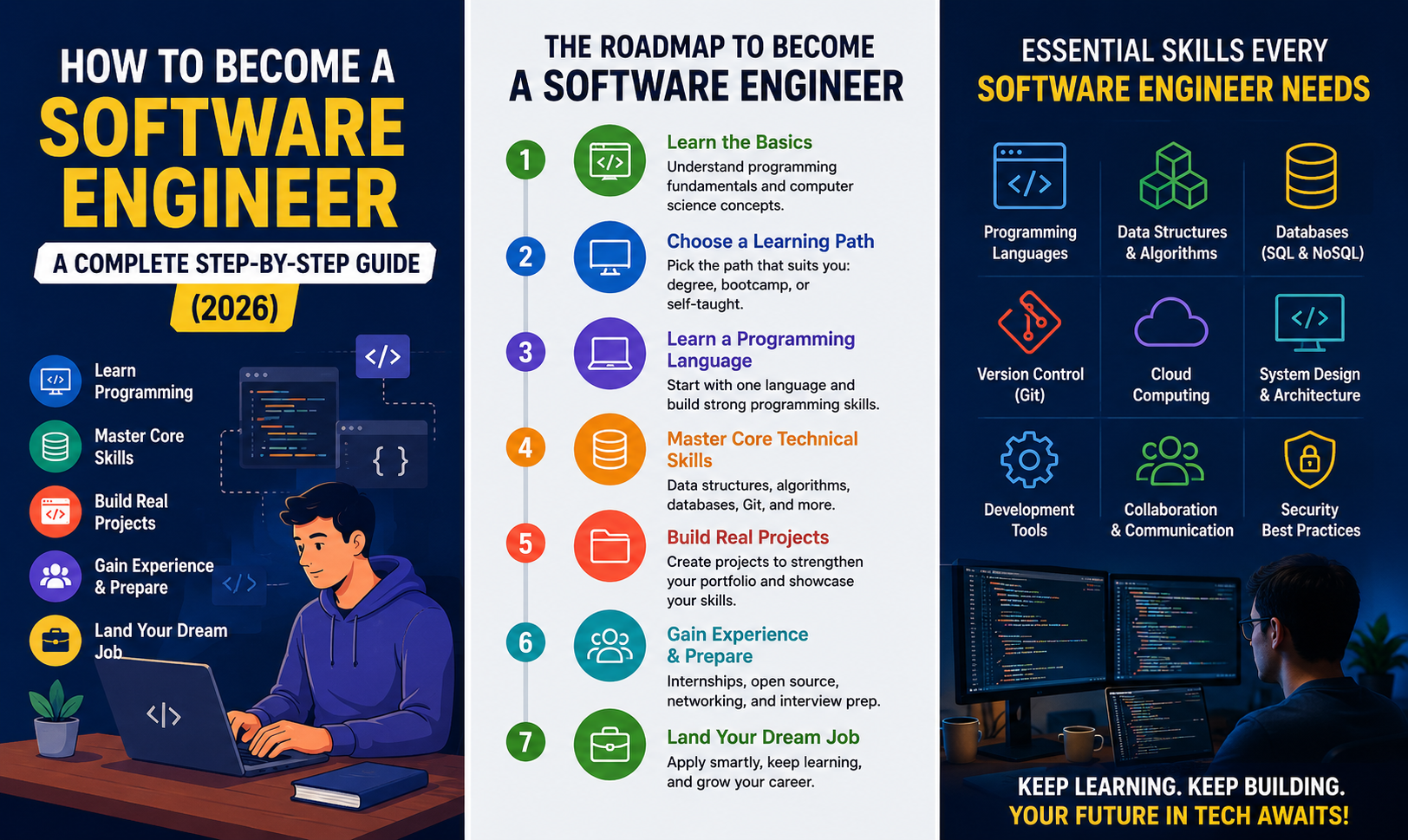
How to Become a Software Engineer: A Complete Step-by-Step Guide (2026)
Introduction
Software engineering remains one of the most in-demand and rewarding careers in the world. From building mobile apps and websites to developing artificial intelligence systems and cloud platforms, software engineers create the technology that powers modern life.
According to industry hiring trends, companies across technology, healthcare, finance, education, cybersecurity, and e-commerce continue to seek skilled software engineers. The profession offers competitive salaries, remote work opportunities, strong career growth, and the chance to solve meaningful problems.
This guide explains the complete process of becoming a software engineer, including education options, technical skills, learning resources, portfolio development, interview preparation, and career advancement strategies.
What Does a Software Engineer Do?
A software engineer designs, develops, tests, deploys, and maintains software applications and systems.
Common Responsibilities
- Writing clean and efficient code
- Designing software architecture
- Testing and debugging applications
- Collaborating with designers and product teams
- Maintaining databases and APIs
- Reviewing code from other developers
- Implementing security best practices
- Optimizing software performance
Popular Software Engineering Specializations
- Front-End Development
- Back-End Development
- Full-Stack Development
- Mobile App Development
- Cloud Engineering
- DevOps Engineering
- Data Engineering
- Machine Learning Engineering
- Cybersecurity Engineering
- Game Development
Step 1: Understand the Fundamentals of Computing
Before learning advanced technologies, build a strong foundation in computer science.
Key Concepts to Learn
Programming Fundamentals
- Variables
- Data Types
- Loops
- Functions
- Arrays
- Objects
- Error Handling
Computer Science Fundamentals
- Data Structures
- Algorithms
- Object-Oriented Programming
- Databases
- Networking
- Operating Systems
- Software Design Principles
Recommended Beginner Resources
- Harvard CS50
- freeCodeCamp
- Codecademy
- Coursera Computer Science Courses
- MIT OpenCourseWare
Step 2: Choose a Learning Path
There are multiple ways to become a software engineer.
Option 1: Computer Science Degree
A bachelor’s degree in Computer Science, Software Engineering, or Information Technology remains one of the most recognized pathways.
Benefits
- Strong theoretical foundation
- Structured curriculum
- Internship opportunities
- Employer recognition
- Professional networking
Typical Subjects
- Programming
- Algorithms
- Database Systems
- Software Engineering
- Artificial Intelligence
- Computer Networks
- Operating Systems
Option 2: Coding Bootcamp
Bootcamps focus on practical job-ready skills.
Benefits
- Faster learning path
- Project-focused training
- Career support
- Lower time commitment
Best For
- Career changers
- Self-motivated learners
- Professionals seeking rapid entry
Option 3: Self-Taught Route
Many successful software engineers are self-taught.
Benefits
- Low cost
- Flexible schedule
- Personalized learning
Requirements
- Strong discipline
- Consistent practice
- Portfolio building
- Networking effort
Step 3: Learn a Programming Language
Start with one primary language before learning multiple technologies.
Recommended Languages
Python
Best for:
- Beginners
- Data Science
- AI
- Automation
- Backend Development
JavaScript
Best for:
- Web Development
- Front-End Development
- Full-Stack Development
Java
Best for:
- Enterprise Applications
- Android Development
- Large Organizations
C#
Best for:
- Game Development
- Enterprise Software
- Microsoft Ecosystem
Go
Best for:
- Cloud Computing
- Backend Systems
- High Performance Services
Step 4: Master Core Technical Skills
Employers expect software engineers to understand more than programming syntax.
Data Structures
Learn:
- Arrays
- Linked Lists
- Stacks
- Queues
- Trees
- Graphs
- Hash Tables
Algorithms
Learn:
- Searching
- Sorting
- Recursion
- Dynamic Programming
- Greedy Algorithms
Databases
Learn both:
SQL Databases
- PostgreSQL
- MySQL
- SQL Server
NoSQL Databases
- MongoDB
- Redis
Version Control
Learn Git thoroughly.
Essential Commands:
- Clone
- Commit
- Branch
- Merge
- Pull Request
- Rebase
Use GitHub to showcase projects.
Step 5: Build Real Projects
Projects demonstrate your abilities better than certificates.
Beginner Projects
- Calculator App
- To-Do List
- Weather App
- Expense Tracker
- Personal Portfolio Website
Intermediate Projects
- E-Commerce Website
- Blog Platform
- Chat Application
- Task Management System
- REST API
Advanced Projects
- SaaS Application
- AI Assistant
- Real-Time Collaboration Tool
- Cloud-Native Platform
- Machine Learning Project
Portfolio Tips
Include:
- Project description
- Technologies used
- Screenshots
- Live demo
- Source code
- Challenges solved
Step 6: Learn Software Development Tools
Modern engineers use many tools daily.
Essential Tools
Development
- Visual Studio Code
- IntelliJ IDEA
- PyCharm
Collaboration
- GitHub
- GitLab
- Jira
Cloud Platforms
- AWS
- Microsoft Azure
- Google Cloud
Containers
- Docker
- Kubernetes
CI/CD
- GitHub Actions
- Jenkins
Step 7: Understand System Design
As you progress, system design becomes increasingly important.
Topics to Learn
- Scalability
- Load Balancing
- Caching
- Databases
- APIs
- Microservices
- Distributed Systems
Recommended Resources
- System Design Primer (GitHub)
- Designing Data-Intensive Applications
- Grokking System Design
Step 8: Gain Real-World Experience
Experience is critical for landing interviews.
Internships
Benefits:
- Industry exposure
- Professional mentorship
- Resume credibility
Freelancing
Platforms include:
Open Source Contributions
Benefits:
- Real-world collaboration
- Code review experience
- Public work history
Popular Platforms:
- GitHub
- GitLab
Step 9: Prepare for Technical Interviews
Technical interviews evaluate problem-solving ability and coding skills.
Common Interview Areas
Coding Problems
Practice on:
- LeetCode
- HackerRank
- CodeSignal
Behavioral Questions
Examples:
- Tell me about yourself.
- Describe a challenging project.
- How do you handle deadlines?
- Explain a technical problem you solved.
System Design Interviews
Focus on:
- Architecture
- Scalability
- Trade-offs
- Reliability
Step 10: Apply for Software Engineering Jobs
Build a Strong Resume
Include:
- Technical Skills
- Projects
- Work Experience
- Education
- Certifications
Optimize LinkedIn Profile
Include:
- Professional headline
- Portfolio links
- GitHub profile
- Project showcases
Networking Strategies
- Attend tech meetups
- Join developer communities
- Participate in hackathons
- Connect with recruiters
Real-World Insights from Industry Professionals
The following insights summarize common advice frequently shared by experienced software engineers, engineering managers, and technical recruiters across the industry.
Senior Software Engineer (8+ Years Experience)
Question: What separates successful junior engineers from others?
Answer:
“Curiosity and consistency matter more than talent. Engineers who keep learning, ask questions, and build projects outside of work often grow much faster.”
Key Takeaway
Focus on continuous improvement rather than perfection.
Engineering Manager
Question: What do hiring managers value most?
Answer:
“We look for candidates who can solve problems, communicate clearly, and demonstrate real project experience. Strong portfolios often stand out more than certificates.”
Key Takeaway
Build practical projects and learn to explain your decisions.
Technical Recruiter
Question: What mistakes do candidates commonly make?
Answer:
“Many applicants submit generic resumes. Tailoring your resume to the job description significantly improves interview chances.”
Key Takeaway
Customize every application.
Cloud Engineer
Question: Which skills are becoming increasingly valuable?
Answer:
“Cloud computing, AI integration, cybersecurity awareness, and automation skills are becoming essential across many engineering roles.”
Key Takeaway
Stay updated with industry trends.
Recommended Learning Roadmap
Months 1–3
- Learn programming basics
- Complete beginner projects
- Study Git and GitHub
Months 4–6
- Learn databases
- Build full-stack applications
- Practice algorithms
Months 7–9
- Learn cloud fundamentals
- Build portfolio projects
- Start open-source contributions
Months 10–12
- Practice interviews
- Refine resume
- Apply for internships and jobs
Essential Books
Beginner
- Automate the Boring Stuff with Python
- Head First Java
Intermediate
- Clean Code
- The Pragmatic Programmer
Advanced
- Designing Data-Intensive Applications
- Software Architecture: The Hard Parts
Common Mistakes to Avoid
- Learning too many languages at once
- Ignoring computer science fundamentals
- Building tutorial-only projects
- Neglecting Git and version control
- Avoiding networking opportunities
- Applying without a portfolio
- Not practicing technical interviews
Career Growth Opportunities
After becoming a software engineer, possible career paths include:
- Senior Software Engineer
- Staff Engineer
- Engineering Manager
- Solutions Architect
- DevOps Engineer
- Cloud Engineer
- AI Engineer
- Machine Learning Engineer
- Security Engineer
- CTO or Technology Leader
Final Thoughts
Becoming a software engineer is achievable through multiple paths, whether you choose a university degree, coding bootcamp, or self-directed learning. The most successful engineers consistently build projects, solve real problems, improve their communication skills, and stay current with evolving technologies.
Focus on mastering fundamentals, creating a strong portfolio, gaining practical experience, and continuously learning. With persistence and deliberate practice, you can build a successful and rewarding software engineering career in today’s technology-driven world.